What Should Businesses Consider Before Investing in AI Surveillance?
AI-powered surveillance helps businesses detect security risks in real time, improve response, protect data, and build scalable security operations.
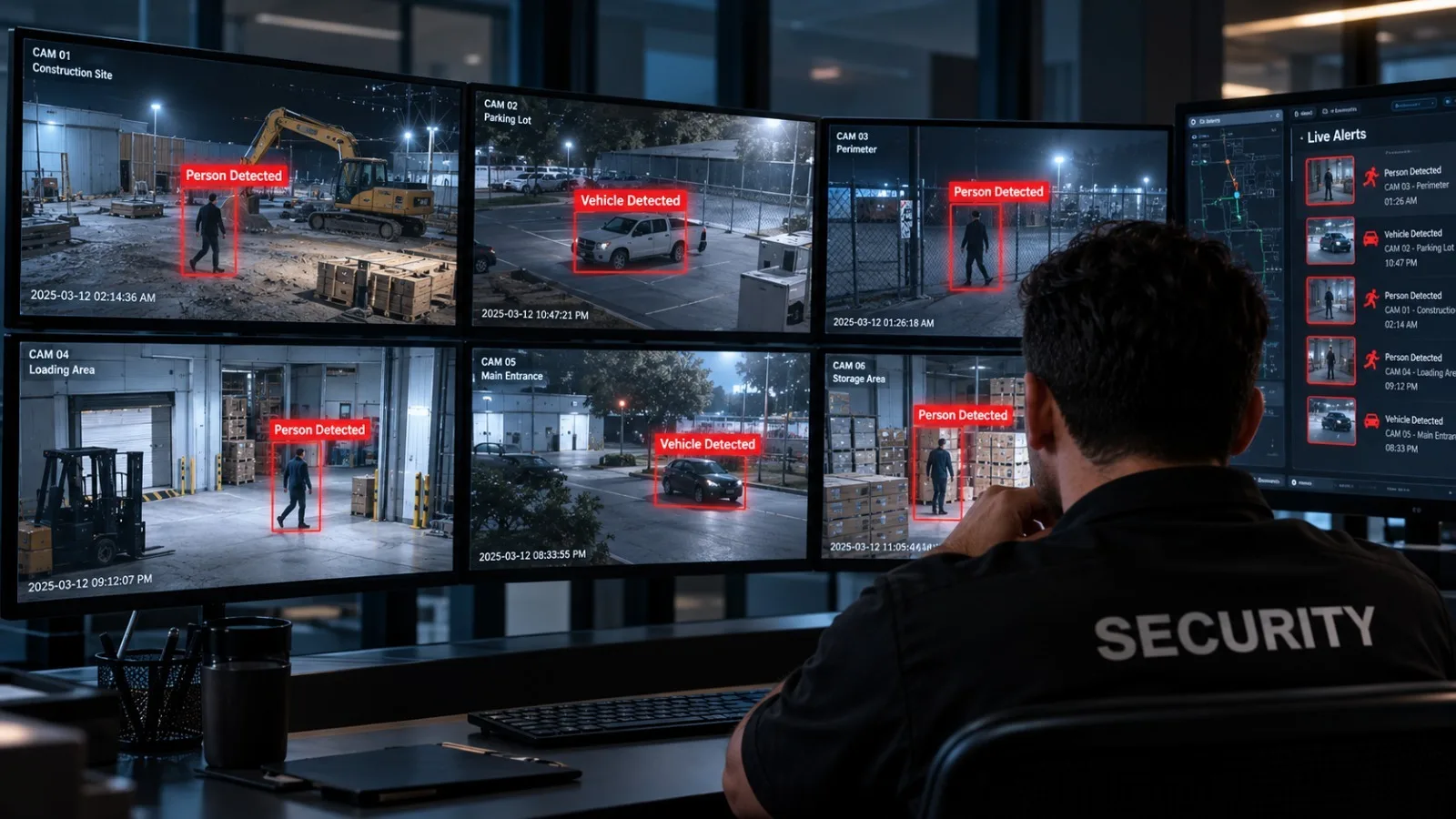
AI-powered surveillance is changing the way businesses approach security. Traditional cameras mainly record what happens, while AI-enabled systems can help detect people, vehicles, unusual activity, and possible security risks in real time. But before investing, businesses should look beyond the word “AI” and understand whether the system will actually solve their security problems, protect their data, and help them respond faster when something happens. The use of AI across business operations is growing rapidly. According to IBM’s 2025 Cost of a Data Breach Report, organisations are increasingly adopting AI and automation in cybersecurity operations, with companies using these technologies extensively reporting significant improvements in security efficiency and reduced breach costs compared with organisations that do not use them. (Source: IBM Cost of a Data Breach Report 2025)
Before choosing a system, businesses should first identify what they are trying to protect. A warehouse may be concerned about inventory theft, a construction site may need better after-hours protection, and a retail property may want closer monitoring of parking areas, entrances, or restricted spaces. The goal should not simply be to install AI because it is available. The technology should solve a clear business problem. AI surveillance may be useful for needs such as unauthorised access, after-hours activity, equipment or inventory protection, perimeter monitoring, loading areas, parking lots, and managing security across multiple locations.
Look at Real-World Performance, Not Just Features
AI surveillance providers may promote high accuracy rates, but performance can change depending on lighting, weather, camera position, distance, and the amount of activity in an area. A system that works well in a demonstration may perform differently at night, outdoors, or in a busy environment. Businesses should also consider false alerts, because too many unnecessary notifications can make security teams less likely to take alerts seriously. A security system that creates excessive false alarms can reduce confidence in the technology and make it harder for teams to identify genuine security events. The National Institute of Standards and Technology (NIST) recommends evaluating AI systems based on reliability, security, transparency, privacy, and accountability throughout their lifecycle instead of relying only on initial performance claims. (Source: NIST AI Risk Management Framework. It is equally important to understand what happens after the system detects something. If someone enters a property at 2:00 AM, does the system only send a notification, or does it actually check and act on the event? A strong security process should follow a simple flow: Detect → Verify → Respond → Record. AI can identify activity quickly, but the real value comes from what happens next.
Understand the Technology, Privacy, and Security
Not every AI surveillance system works the same way. Some systems simply detect activity, such as a person entering a restricted area or a vehicle arriving after hours. Others may use facial recognition or other biometric technology. Businesses should understand exactly what information is being collected and whether they really need those features. Privacy has become an important consideration as businesses continue adopting AI technologies. Cisco’s Data Privacy Benchmark Study found that 90% of organisations expanded their privacy programs because of AI adoption, while 93% expect to increase investment in privacy and data governance.
(Source: Cisco Data Privacy Benchmark Study) Businesses should also know where video footage is stored, how long it is kept, who can access it, and whether the provider can use it for other purposes. Because modern cameras are connected devices, cybersecurity matters too. Secure logins, controlled access, software updates, and protected remote connections should be part of the system from the beginning.
Consider the Full Cost and Future Growth
The cost of AI surveillance goes beyond the camera itself. Businesses may also need to pay for installation, cloud storage, software, monitoring services, network upgrades, maintenance, and future expansion. Instead of focusing only on the purchase price, businesses should ask what value the system will provide over time. For example, could the system help reduce the time employees spend reviewing footage? Could it help security teams monitor multiple locations more effectively? Could it help identify important events faster? Organisations are increasingly evaluating AI investments based on operational improvements, efficiency, and risk reduction rather than only the initial technology cost. IBM’s research highlights that businesses using AI and automation in security operations can achieve measurable improvements in incident response and overall security efficiency.
(Source: IBM Cost of a Data Breach Report 2025) A good system should also be able to grow with the business. If more cameras, buildings, or locations are added later, the platform should make expansion simple. Businesses should look for systems that can manage multiple locations, provide different access levels for different users, and work with existing security equipment where possible.
Keep People Involved and Test Before Scaling
AI is very good at watching large amounts of video and detecting activity quickly, but it does not always understand the full situation. A person in a restricted area could be an intruder, an employee, a contractor, or someone who entered by mistake. Human verification adds the context that AI may not have. For that reason, many businesses benefit from using AI for fast detection while relying on trained people for verification and response. NIST’s AI Risk Management Framework emphasises the importance of human oversight, accountability, transparency, and continuous evaluation when organisations deploy AI systems.(Source: NIST AI Risk Management Framework)
Before rolling the system out across every location, it is also smart to test it on a smaller scale. A pilot can show how well the system performs during the day, at night, during busy periods, and in real operating conditions. Testing the technology in an actual business environment helps organisations understand whether the system delivers meaningful security improvements before making a larger investment.
Conclusion
AI surveillance can help businesses detect activity sooner, monitor more areas, and respond faster to potential security issues. But the best system is not necessarily the one with the most advanced features. Businesses should focus on whether the technology solves a real problem, performs reliably in their environment, protects their data, supports a clear response process, and can grow with their needs. The right AI surveillance system should help your business see important activity sooner, understand what is happening, and take action when it matters most.
Ready to Take the Next Step?
With VERIFAI, businesses can move beyond traditional surveillance with AI-powered detection, remote monitoring, and faster response—all designed to help protect what matters most. Explore how VERIFAI’s AI-powered remote monitoring solutions can help your property improve visibility, strengthen security operations, and respond more effectively when it matters.
Ready to Protect Your Business?
Join 30,000+ installations worldwide. Get a free site assessment from a VerifAI security specialist today.
Get a Free Assessment